

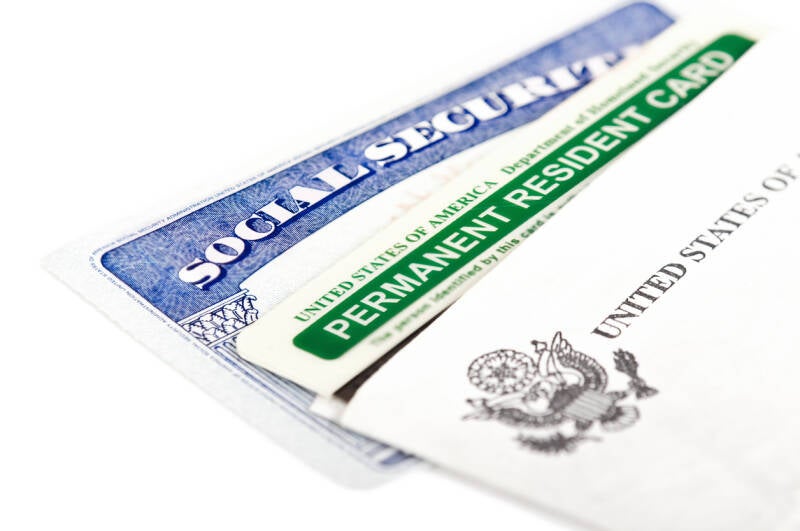
For years, the Form I-9 was treated as routine onboarding paperwork: a box to check, a form to file, a thing you never thought about again. In 2026, that mindset has quietly become one of the most expensive mistakes a staffing agency can make.
Worksite enforcement is back, and it's back at a scale the industry hasn't seen in years. ICE audit volume is up roughly tenfold from 2024 levels. The 2025 federal funding package added thousands of new enforcement officers — the largest single expansion in the agency's history. And when ICE looks for where to focus, staffing sits near the top of the list, named alongside construction, hospitality, agriculture, and manufacturing as a priority industry.
If you run a staffing agency, this isn't a distant policy story. It's a direct operational risk to your business.
The rules got stricter — quietly
The bigger problem isn't just more audits. It's that the cost of getting an I-9 wrong went up, even when nothing about your process changed.
In a 2026 update to its inspection guidance, ICE reclassified a range of common errors that used to be considered "technical" — the kind you could fix within a 10-day correction window — as "substantive" violations. Substantive violations are fineable immediately. There's no grace period, no opportunity to quietly clean up the file before the penalty attaches.
That includes things many agencies don't think twice about: gaps in an electronic system's audit trail, missing or improper electronic signatures, and failing to correctly document when a worker's documents were reviewed remotely.
The math is brutal at staffing volume
Here's why this matters so much for our industry specifically. Historically, ICE audits find at least one fineable error in roughly three out of every four I-9 forms they review. The single most common cause is simple: Section 2 completed late.
Now apply the penalties. Paperwork violations run from a few hundred to a few thousand dollars per form. Knowingly employing an unauthorized worker can reach tens of thousands of dollars per worker, with repeat violations pushing higher still — and, in serious cases, criminal exposure and debarment from federal contracts.
A small business with a handful of employees might absorb a bad audit. A staffing agency running hundreds or thousands of placements a year, with a high-volume, high-turnover workforce spread across multiple worksites, is looking at a number that can threaten the entire company. Every placement is an I-9. Every I-9 is a potential line item in a penalty calculation.
E-Verify is no longer optional in practice
There's a second pressure building at the same time. Your clients are increasingly pushing E-Verify participation down through the labor supply chain — and in some cases, the law is doing it for them.
Federal contract requirements now call for E-Verify on nearly all new hires tied to covered contracts. More than two dozen states have some form of E-Verify mandate for public employers, contractors, or private companies, and that patchwork is still growing. Just as important for staffing: if you hire remotely, the compliant remote I-9 verification process is only available to employers enrolled in E-Verify. If you're still running paper I-9s and verifying documents over a video call without E-Verify, you're exposed.
For agencies chasing government work or placing into regulated industries, E-Verify has effectively moved from "nice to have" to "table stakes."
What audit-ready actually looks like in 2026
You can't control whether ICE shows up. You can control whether your files survive the inspection. A defensible I-9 program in today's environment means:
- Use the current Form I-9 edition. Confirm the edition date on the actual form, not the file name. Using an expired version after its valid window closes is itself a substantive violation.
- Hit the deadlines, every time. Section 1 completed by the worker's first day of pay, Section 2 within three business days of the start date. No exceptions, no backlog.
- Enroll in E-Verify and create cases on time — within three business days of the start date.
- If you verify remotely, do it the compliant way: live video review of original documents, retain copies, and check the alternative-procedure box. This is only available to E-Verify employers in good standing.
- Keep defensible electronic records: complete audit trails, accurate timestamps, secure storage, and clean signatures. This is exactly where the newly reclassified violations live.
- Run internal self-audits quarterly and maintain a reverification calendar. With work-authorization programs and document extensions in flux, expiring authorization can create a compliance gap if no one is watching the dates.
- Review your I-9 practices during any acquisition or workforce integration. Legacy I-9 problems become your problems the moment you absorb another book of business.
- Have a Notice of Inspection response plan ready — and involve immigration counsel immediately if one arrives. The deadlines are short and unforgiving.
The structural fix: let the right employer carry the risk
Here's the strategic point most agency owners miss. I-9 and E-Verify compliance isn't really a paperwork problem. It's a question of who is the employer of record — because the employer is the party on the hook when ICE comes knocking.
When you place workers through an Employer of Record, the EOR is the legal W-2 employer. That means the I-9 obligation, E-Verify enrollment and case management, the audit trail, the recordkeeping, and the reverification tracking all sit with the EOR — handled inside a single, consistent onboarding system rather than scattered across spreadsheets, email, and field offices. That's not just convenience. It's a structural transfer of one of the fastest-growing liabilities in the staffing industry off of your balance sheet.
This is exactly what VimHR is built to do. As your EOR, with onboarding, I-9 completion, and E-Verify managed through the VimOne platform, compliance stops being something you hope holds up under scrutiny and becomes infrastructure designed to pass inspection. In a year where the difference between "compliant enough" and "audit-ready" can be measured in hundreds of thousands of dollars, that distinction is the whole ballgame.
The agencies that treat I-9 and E-Verify as an ongoing governance priority — not a one-time onboarding task — are the ones that will navigate 2026 without a headline. If you're not certain your back office could survive a Notice of Inspection tomorrow, that's the conversation worth having now, not after the letter arrives.
VimHR is a technology-enabled Employer of Record built for staffing agencies, combining EOR compliance, payroll, and the VimOne workforce management platform. To talk through your compliance exposure, reach out through our contact page.
Add comment
Comments